Another Murderous Madman and the Obvious Common Denominator

A bunch of girls didn’t do what he wanted, so he set out to hurt a bunch of girls and teach them all a lesson. Folks, yes that is misogyny, yes it is gun violence, but mainly

IT IS PUNISHMENT.

The reason all these killers find it reasonable and rational to hurt the people who don’t do what they want, is because EVERYONE finds it reasonable and rational to hurt people when they don’t do what  they want. That’s the concept of punishment. And we all know where he learned it, where they all learn it, where WE all learned it. Right?

Now how is it that what these crazies are trying to do and why is somehow not front and center of the conversation? Why are we talking about sex rather than the roots of violence, why are we talking about who the victims are instead of what these killers are doing and why?

Nature VS Nurture and Twin Studies


First, sorry for the first post, it’s gone. I’ve just learned something about ‘Link’ posts.


This isn’t the most comprehensive article about all the separated twin studies that have been done, but it’s new, and typical enough. Here’s an excerpt, a link to the article and the author’s data, then my comments:


“To explain this close bond, psychologists frequently look to environmental factors: Identical twins, growing up in lock step, share most of the same experiences (they are often even treated the same by others) and therefore develop their unusually strong connection. But my research on reunited twins challenges this theory. I have found, for example, that reunited identical twins report feeling greater closeness to each other than do reunited fraternal twins. And I have found that a reunited twin generally reports feeling closer to the twin he only recently met than to a genetically unrelated sibling with whom he was raised.

Given that reunited twins were not reared in the same environment, genetic factors are surely relevant to these bonds. But how do shared genes result in an immediate sense of connection?”


http://www.nytimes.com/2014/05/25/opinion/sunday/the-closest-of-strangers.html?smid=tw-share&_r=0


Nancy L. Segal, a professor of developmental psychology at California State University, Fullerton, is the author of “Born Together — Reared Apart: The Landmark Minnesota Twin Study.”


How different are the environments really? Don’t we all raise our kids the same way, with the same methods? And even in the case of these ladies, isn’t American culture and therefore American child-rearing simply a continiuation of the British version? Aren’t the apparent differences from household to household superficial? For this, I offer the relative ubiquity of parenting books and discussions where the basic premises are nearly universal while only the details of how and when parental control is exercised differ.

Which makes me wonder that we are not looking at the correlation of genes in interaction with different environments, but genes in correlation to environments that are actually also very similar. Again, within a given culture, how different are the environments provided for children? This idea would have to extend to the sorts of personality tests that the twins do so similarly at: are the described personality traits and types not also visible only in contrast with a fairly uniform background? If so, the power of our genes, and so of the Nature over Nurture argument, is going to win every time, considering that there really be very little variation in the environment children are raised in anyway.

My Kids, Eminem’s Mom, and Who to Trust . . .

http://mashable.com/2014/05/11/eminem-apologizes-to-mom-in-emotional-mothers-day-music-video/

Perusing my Twitter feed on Mothers’ Day, I came across this post, declaring that Mr. Mathers was apologizing to his mother, perhaps suggesting that he was taking it all back, that he was bad and she was right . . .

I read the headline out at home to my wife and kids, and my daughter immediately (we were all, as usual, wired into the matrix, ready to Google anything at a moment’s notice) looked up the song and after giving it a listen announced –

“Don’t worry. It’s not that apologetic.”

That was good enough for me.

My family loves Mr. Mathers, my sister was blown away by ‘Cleaning out my Closet’ when it came out, my family of origin are all into psychology and the subject of abuse, my sister especially is a great fan of Alice Miller, among others. In my kids’ family of origin, we all love him too, even when he recants, or especially when he recants, his obvious honesty and his obviously bruised feelings  we find rare and endearing. Who else puts it all out there like that?

Don’t get me wrong, I’m up over fifty. It’s the words I love, the writing and the feelings. I wasn’t born to love hip-hop.

I took all that talk about psychology and abuse to heart. My wife and I raised raised our two girls without any punishment at all, and no censorship either. These kids were raised on Eminem and, when only listening to the white rapper got embarrassing (rather quickly), we added a bunch of Wu Tang and Snoop. These influences on my kids were probably second only to Matt Stone, Trey Parker, and Seth MacFarlane.

My kids are brilliant. Straight ‘A’s all the way, and we had almost none of the usual teen troubles. Well, they’re lazy and messy – but that’s the worst of it. Really, it is.

Of course, both my families have been on Marshall’s side in his battles with his mom. The idea that he recanted on that was very threatening indeed, to my whole philosophy, my whole life, but of course, this reversal is the same reversal so many parent’s go through. For so many of us, our parents were all wrong until we find ourselves doing the same things. For fans of Eminem, it should be no surprise, we know he’s been guilty of some of the very same things his parents were, of being away a lot, of being drug-dependent. His reversal should have been no surprise, but the surprise wasn’t the worst of it.

Hearing anyone recant on what our parents did wrong is always sad.

So many parents want to raise their kids without the hitting, without the punishments they suffered – and so many recant when they find out that they can’t have it all their way without the same old methods.

My advice is to not have it all your way, lose the fights. That is far better than winning by forceful or violent means. That’s what we did.

Did I mention my kids are brilliant?

I haven’t gotten around to watching “Headlights” yet, but my daughter took the sting out of it for me. If she says it’s not “that apologetic,” then it’s not. I trust her completely. My girls are smarter and less deluded than 99% of people generally, and certainly smarter and less deluded than anyone posting “parental apologist” stuff on the internet on Mother’s Day.

When my girls talk, when they make assessments, that’s about as good as it gets.

If they approve, I approve.

Damages of Punishment

The damages of abuse are well known. They come in many forms, forms that can be categorized in the following ways; these damages will be some or all of:

Physical

Emotional

Psychological

Cognitive

The damages of corporal punishment form the very same list. This is why corporal punishment is being outlawed across the civilized world.

But corporal punishment is not only physical. How do you bring physical hurt to a person – a child – without hurting their feelings? How does an adult cause physical hurt to a child without offending the child’s mind?

So the other three categories come free with the first, and pain from each category brings its corresponding damage. It seems more than just likely that pain from the non-physical categories will bring their own damages with or without representation from the purely physical.

What is “non-corporal punishment” anyway?

Would anyone really like to step up and advocate for:

emotional punishment?

psychological punishment?

cognitive punishment?

Anyone?

Anyone at all . . .

She’s leaving Home (not entirely unrelated title . . . )

I was six years old when Sgt. Pepper’s Lonely Hearts Club Band came out.

Several years ago, my own kids discovered and loved the Beatles; my younger is obsessive, and loved them the most. learning everything about them. We got a new, remastered box set, and she’s been teaching me Beatles songs and trivia I never knew at all. It was a pleasant surprise to learn that the Beatles appeal is timeless. I’ve been hearing them – all of it. I only always owned Magical Mystery Tour, Abbey Road, and the White Album all through the intervening years, on LP and then CD – a lot over the last five or ten years, and I’ve come to think that ‘She’s Leaving Home’ is the super-emotional, semi-classical song that first made me think about what is so wrong with so much of parenting.

(There it is!)

“What did we do that was wrong?

We didn’t know it was wrong . . . “

These poor parents can’t understand it, they did the best they could. Their world is imploding because their daughter has left home, with nothing but a short note, with no apparent thought for the parents who thought they had loved her so well.

If the girl did give a backward glance on her way to the man in the motor trade, the Beatles didn’t mention it.

This was always heart-wrenching to me; I think I was born pre-disposed to heartbreak, adult loss of love always got me, even as a young kid, I could always feel the heartbreak in adult stories. I had a strange sort of fantasy through my early teens where I would be an adult man with children who had somehow lost his wife and the kids their mother, living as a single, grieving father, somehow that sort of tragedy appealed to me, romantically. But these crying parents in the song, these sad people who can’t understand why they should suffer this loss, this stayed with me, it marked me.

This is the tragedy that drives me, that drives my philosophy. But there’s a point to this.

Of course, if you’ve read my stuff at all, you know what I think caused it. You know why I think the parents are so unconsciously remorseful, and how that young girl could do this to them.

It’s not just about the the kids for me. This one is for the parents.

We are all the subjects of this tragedy. And twice, coming and going, we are all both of them. We are the girl, who runs away about as soon as she’s old enough to attract a mate, and we are also the grieving parents losing their child.

“She’s leaving home . . . bye, bye.”

Love Flowing Backwards

It’s a sad thing, but a vicious cycle, and a real one, in many families: reverse flow.

In some families, and to some degree or other in many families, sad to say, it is the children who sacrifice, the children that spend their days protecting the adults from their bad feelings, making sure the adults feel loved.

Adults know how important it is for children that they feel loved. Unfortunately, for so many, that is not always the priority for parents and caregivers, too often the priority seems to be discipline first, and love second. For children, however, for that very reason, that choice is not available, they are not able to exercise that sort of prioritization.

When an adult requires a child’s love, that child had better just give it up. An adult in the throes of feeling unloved, and adult who is experiencing their infantile lack of love is a dangerous thing to a child. A child in this situation has no choice. This child must set aside his own needs and serve the adult’s needs; this is a matter of self-preservation, and the child, almost invariably will look after his life first, and search for love later.

Unfortunately, what often happens is this search for love later in life becomes a desire to have children and continue this backward cycle.

(As a half-humourous aside, I must observe that in the world I am hoping to help create, saying “I want a child” will begin to be seen as a form of “I want a human being,” alongside of horrible phrases like “I want a Negro,” or “I want a pair of Vietnamese nymphets.” These are human beings, not possessions of some sort. It should be seen as a horrible thing to say, and it should be obvious that saying it signals an unhealthy psychological need as much – and more importantly – as it does a natural manifestation of the procreative urge.)

I’ve said it before, and I know I’ll be saying it again:

This generation needs to lose at both ends. We may not have gotten the unconditional love we needed as children, but we need to break the cycle. We need to not get that love again, we need to not suck it out of our children. That doesn’t save us anyway, it only continues the cycle, it only hurts our children, and theirs, and theirs, ad infinitum.

The buck should stop here. Let’s be the last unloved generation.

Don’t Turn Your Back on your Childhood Self

When I was a kid, and still pretty young, I realized my parents were crazy.

There was a moment that I remember, although I’m sure it’s not an isolated incident. We were in the car, going somewhere or coming back, all of us, me and my brother, my two sisters, and my parents, in the big family car, Mom and Dad in the front, kids in the back, either the Meteor or the Parisienne. This would have been in the mid to late 1960s.

My brother was hyper as Hell, he could get on your nerves, and had gotten on Dad’s. He’d gone too far; he knew he was in for it, and so he got scared and started crying. This was at least partly from real fear, maybe partly a ploy, something kids do to try to tell a parent that they’ve made their point, but he was really crying. Dad apparently found this noise to be not any less irritating than my brother’s preceding noise, and growled (perhaps you’ve heard this one before?)

“Stop crying, or by God, I’ll give you something to cry about!”

To my mind at the time, the child, my older brother by a year and a half, was already crying from fear, and my father’s solution was simply more fear. This seemed unreasonable to me; I was crying also, and I too was only more afraid and only cried harder after that. That may not have been the only time, but it’s the one I remember the most, and I decided in that moment that grownups were crazy.

The difference between me and most people, between me and you, is that I’ve never changed my mind about it. To reverse myself about that is, definitively, to become crazy. To join the ranks of the mad, and I’m not doing it. My eyes were clear in that moment.

Now, I know you’ve all been there too as kids. I hope I can in some humble, respectful way, suggest that if you have changed your mind in that way, that you reconsider, retrace your steps, and start again. Support the sane, frightened child you once were and reject the madness that we call ‘parenting, discipline, punishment, consequences.’

Support the child you once were, and support the children in your world now.

And support me too! Follow me on Twitter. I will continue to try at least to put something out in this topic weekly.

My Doctrine: Abuse with an Excuse

Abuse with an Excuse – Doctrine in short form . . . Part #1


A. Damages

1. Abuse in its several forms damages people. The forms are these: physical, mental (cognitive), emotional and psychological. The damages have the same forms. This is well documented.

2. Corporal punishment also damages people, and the damages take the same forms: physical, mental, cognitive, emotional and psychological. This is well documented. The corporal punishment of children is being outlawed in much of the world, driven by the U.N. Committee on the Rights of the Child.


3. Non-corporal punishment cannot actually exist, it’s a logical fallacy – an oxymoron, in fact. The argument goes like this:


– punishments are unpleasantnesses, they are by definition, something the punished person would not want, and so they are necessarily imposed, forced upon the punished person, against his will. Anything forced, anything imposed, involves either direct physical means, or at least the threat of physical means.

– punishments are employed when reason and talk – non-physical methods – fail, or are presumed to fail. This is often true, that these non-physical means fail, babies and young toddlers can’t be reasoned with, and even for older children who can be, punishments are usually only considered when any child is being unreasonable in the first place. When non-physical methods have been attempted and then ruled out, then logically what remains is physical, either directly or in potential.


Therefore punishment is impossible except that it’s physical. The only possible exception to this logical proof is in the case of punishments that are purely mental, emotional, or psychological, and these sorts of punishments are also universally considered to be unacceptable and abusive.


When children submit to their non-corporal punishments, this is not a disproof. It is only that the child is making a choice, the child is either remembering his baby or toddlerhood punishments, the physical ones, or more likely the child knows that if he resists, that the punishments will escalate and become corporal punishments, or most likely both, some combination of the two.


4. Conclusion: there are no non-corporal punishments. All punishments require force and physicality. Therefore all punishment is corporal punishment, therefore all punishment cause the damages associated with corporal punishment.


Abuse with an Excuse – Doctrine in short form . . . Part #2


B. The Cognitive Damage


1. Punishments/penalties are all artificial consequences, contrived ones. It is not really a simple ‘cause and effect’ phenomenon when some active agent chooses the effect for a cause. In this way, our contrived consequences are substituted for the real world, natural consequences a child may experience when he explores or misbehaves, and therefore any real world learning experience is circumvented. This is the function that is in play when we note, through many good studies that corporal punishment hampers cognitive development.


When standardized punishments are substituted for the nearly infinite number of random real world consequences of childhood exploration as well as misdeeds, the vast and varied learning that may have happened is severely lessened, and the only learning that does happen is artificial and contrived. This is definitive of serious arrested cognitive development. It follows that the resulting impairment of thought will vary, of course with many factors, but certainly with the degree to which a child is controlled. A child who has more real world learning experience will be better able to process information regarding the real world than one whose learning years held few real world mistakes and learning opportunities.


2. Of course, parents need to protect their children from extreme danger. Life and limb certainly take priority over individual missed opportunities for real world learning. These safety hazards are not the most common situations parents and children face, however, and this is not a valid argument for the use of punishment generally.


Some may say that children need to be punished to learn to obey in every situation, so that their obedience will be guaranteed when there does arise a hazard, a real threat to life and limb, that a child needs to be conditioned to obey so that he may be ordered away from a street or a river and will comply immediately. This, I would say is a valid argument only if this sort of conditioning didn’t have a serious down-side. I believe that the damages that result from punishing, and certainly from the all-encompassing environment of punishment that this argument implies, brings a terrible cost also, up to and including a considerable cost of life and limb, in the form of violence, crime and suicide, along with the many social costs that are not as visible, that result from the cognitive hobbling that is produced by these methods.


Abuse with an Excuse – Doctrine in short form . . . Part #3


C. Childhood Misbehaviours are Irrelevant


1. When we are punishing our children to teach them not to cause any harm in our lives, not to break anything, not to hurt anyone, we are causing permanent harm in our attempts to avoid short term and material harm. The damages of abuse and corporal punishment are long lasting, while the damages of childhood misbehaviours are, for the most part, either material or temporary, sometimes both.


Temporary damages are bruises that result from infantile violence or carelessness, or simply missed or disrupted adult social occasions; material ones are broken dishes, damaged or stained clothing or furniture – of course material damages can be either permanent or temporary; a loved glass heirloom is forever, a coloured wall until the next painting. Things like painting the wall cost labour and money, which, if it happens to a modern person living in debt, may be a permanent harm to their finances. Young children can cause real harms, but again, as in the previous section, this would only justify the damages of punishment if those damages were small and temporary, and they are not. The damages of corporal punishment (and it is my position that there is no other kind) are long lasting and impact every aspect of life. This, again, is well documented.


2. Childhood explorations and mistakes, when they go bad, can cause some damage, things get broken, caregivers and other children get bruised and inconvenienced, but for the most part, these are individual, one-off incidents, that is, single incidents, with a single instance of damage per case. If we consider that each instance is a learning opportunity, each instance can teach a child a single lesson such as the fragility of pretty glass objects, or the fragility of human relationships (when one toddler hurts another, and the other expresses his feelings somehow), we can see that trading any one such lesson off against a lifetime of suffering the damage of having been punished is a bad bargain. The long term damages of punishment would only be justifiable by considering that the damages of the child’s misbehaviour are also long lasting. In reality, the occurrence of a misdeed or a mistake by a child will rarely be habit forming. These things, dish-breaking, punching other children, do not become chronic if they go un-punished. In reality, punishing increases defiance and misbehaviour in the long term.
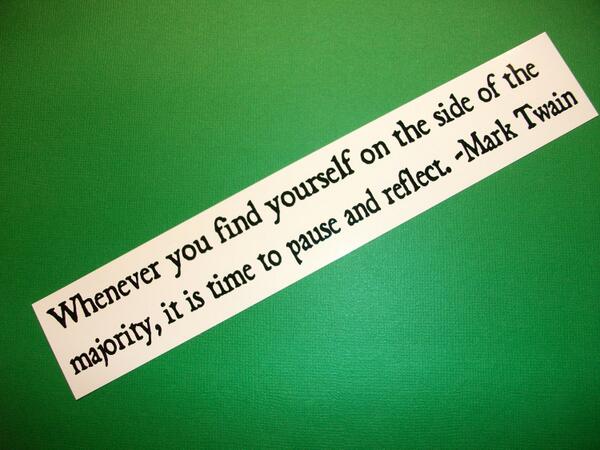
Consequences, shmonsequences . . .

Change your ways, people, not your words, or not only your words.

Consequences, discipline, ’cause and effect,’ these are all words for punishing. If you’re imposing any of these things, you’re punishing . . . and yes, that’s . . . bad.

I am the most politically correct person you’d care to meet, but here’s what’s wrong with so much about PC terms: they’re terms. Words. We have seen words banned, new words for old things, old words disappearing, but the things never seem to.  Outlawing the N-word has not ended some peoples’ dislike for black people, racism still exists, albeit in code.

Punishment still abounds, albeit in code. Changing things, though, that is more difficult than changing words. Changing this thing, the world-destroying scourge of punishing, this is going to be harder than memorizing new words for it. It’s going to involve some very heavy lifting, namely:

1. Admitting our parents hurt us to no good end; and

2. Never regaining our sense of personal power by hurting our kids to no good end.

That is some very heavy lifting. No shame in not doing it – just no glory either.